Day Twenty-Nine: Rigueur/Douceur

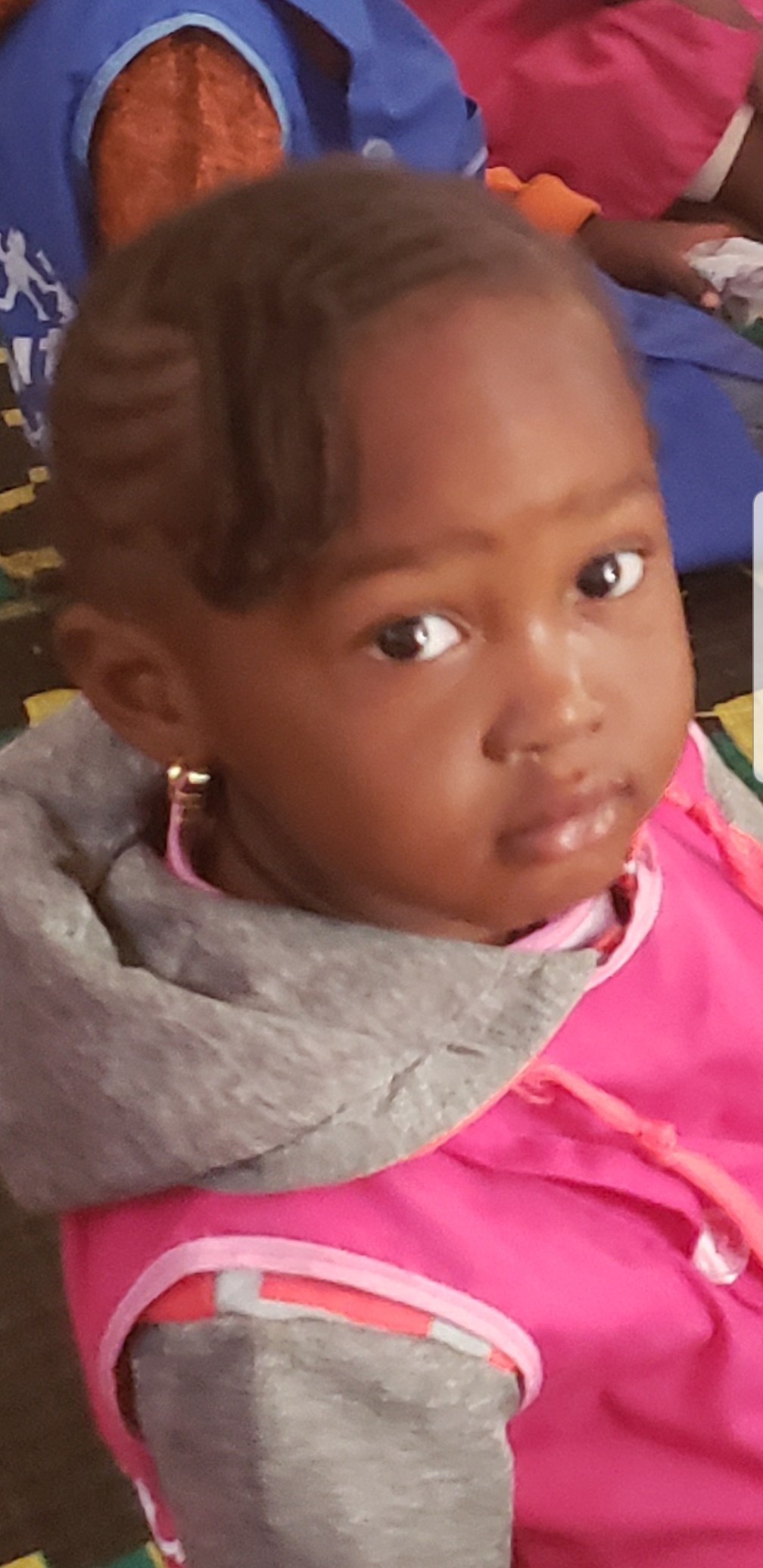
The kids’ vests said it all: rigor and softness. We’ll ask the children to work hard and we’ll love them.

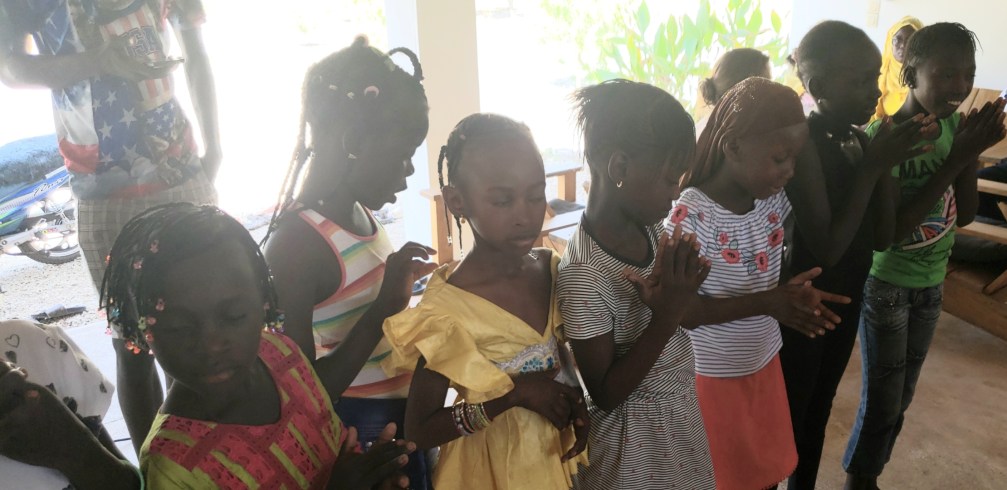
Lydia, Marie-paule and I visited the Toubacouta school for young students yesterday. I was there first so I walked through the gate into a courtyard with swings, hanging backpacks, and shoes lined up in neat rows outside of the main building. I sat on the step and wondered if this place would be a big part of my life someday.

When the women arrived, we walked towards the door and were greeted by a teacher in a lovely African dress, splashed with colour. She smiled radiantly and ushered us inside. Kids were spread over the floor in two groups, all sitting on big mats. Eyes widened and bodies started bouncing. Marie-paule and Lydia began talking to a few adults but I didn’t want to do that. I sat on a chair beside lots of young ones – about five years old. Within seconds, legs lifted bodies, hands extended to mine and personal space was just some weird Western concept.

Kids reached for my glasses. They rubbed my white arms. They sought my grey hair. I said no to some of it but mostly I loved the contact.

A shrill teacher voice in a language I didn’t understand jolted eyes wide and sent feet scurrying back to the mat. Tiny blackboards were distributed and students got to work with their chalk. Drawings, rather than letters, were created. Rags and a bucket of water were nearby for erasing and starting again. It reminded me a lot of the Grade 5/6 class back in Canada when the kids were doing Math.

The space was packed with noise … and movement. I smiled to think of teachers’ reactions to this situation back home. Every minute or two, a Senegalese teacher would yell at some kid. At least I think that was what was happening. It was rapid-fire words with definitely an edge to them.

Later in the morning, I got to attend a language class with about fifteen kids. French was the language being learned. It appeared that a new girl was joining the class and the lesson was about how to welcome her. As well as coaching the students about what words to use, the teacher had each child approach the new one, make eye contact and shake her hand. Very cool. When each student completed the task, the teacher smiled at them, drew them close and placed a kiss on the cheek. Yes, I was in another world, but it was still reminiscent of tender moments in Canadian classrooms.

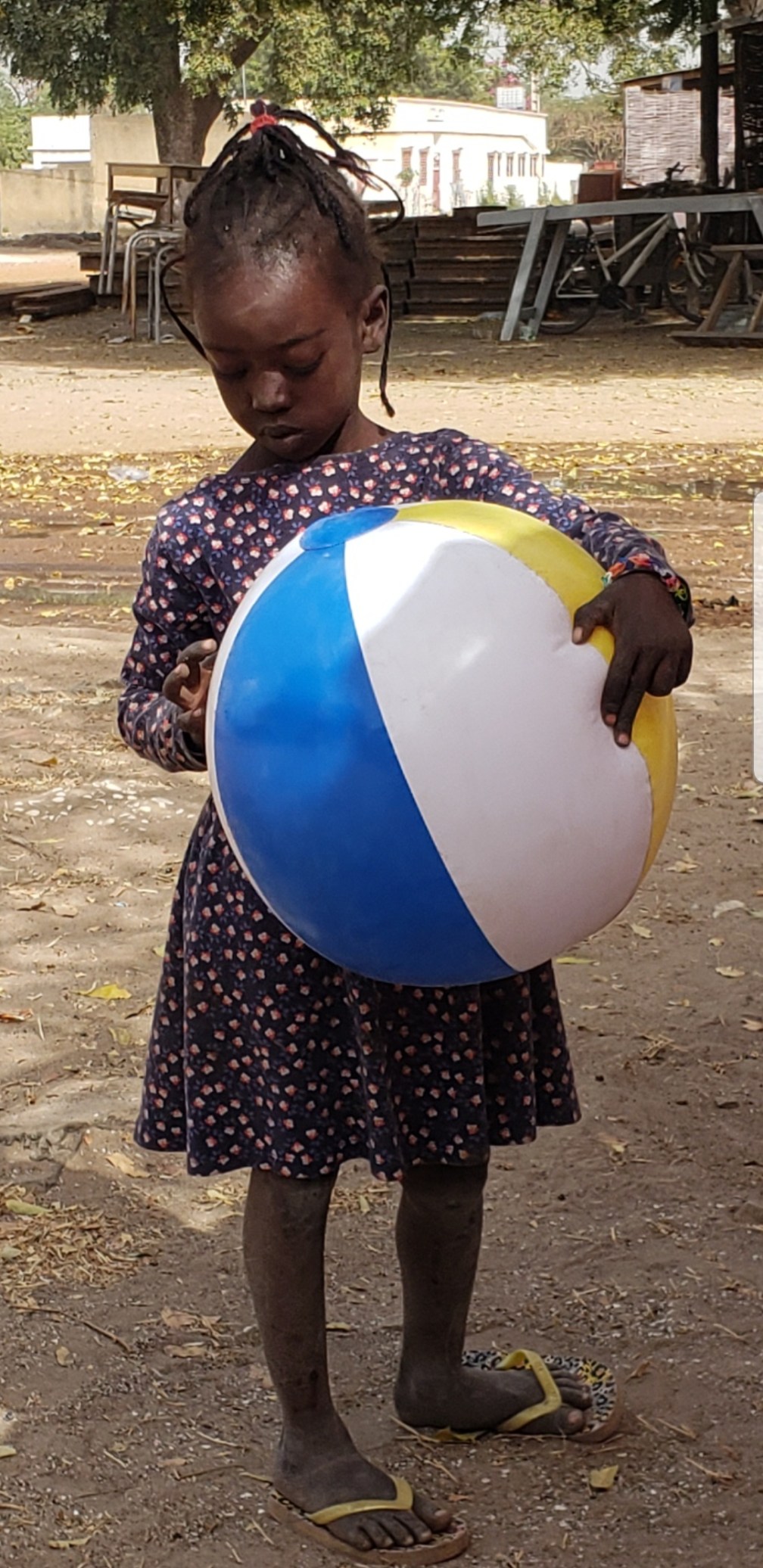
During my time in Senegal, I’ve given away most of the gifts that the kids in Belmont had made or provided – bracelets, books, beach balls. What remained was four skipping ropes, donated by a creative young lady in Grade 6. Lydia advised me to give them to teachers at the school so everyone could enjoy them. Good plan. So I did.

At recess, one of the teachers took an orange rope outside. Soon she and a child were on either end and kids took turns jumping in. I should have suspected that they’d be naturals. Then Lydia grabbed a rope and demoed solitary skipping. Woh! Small eyes followed the bouncing human.

***

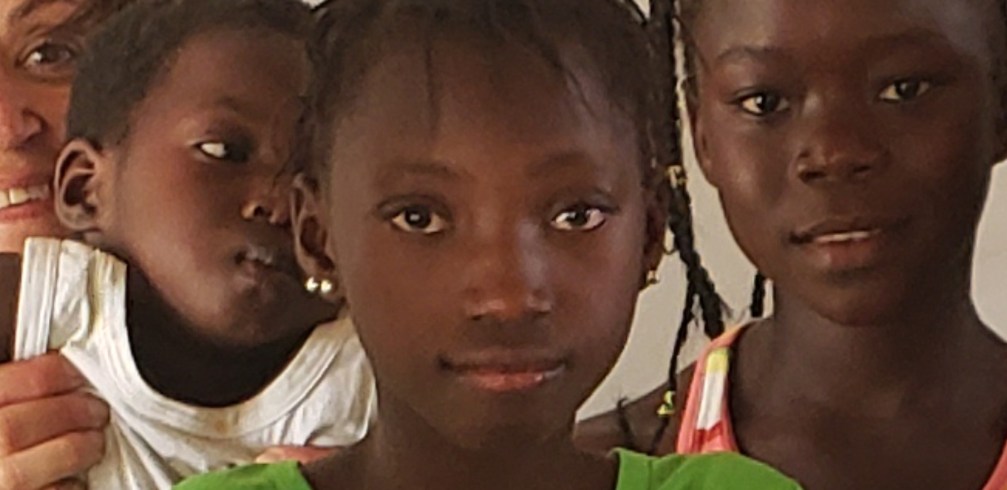
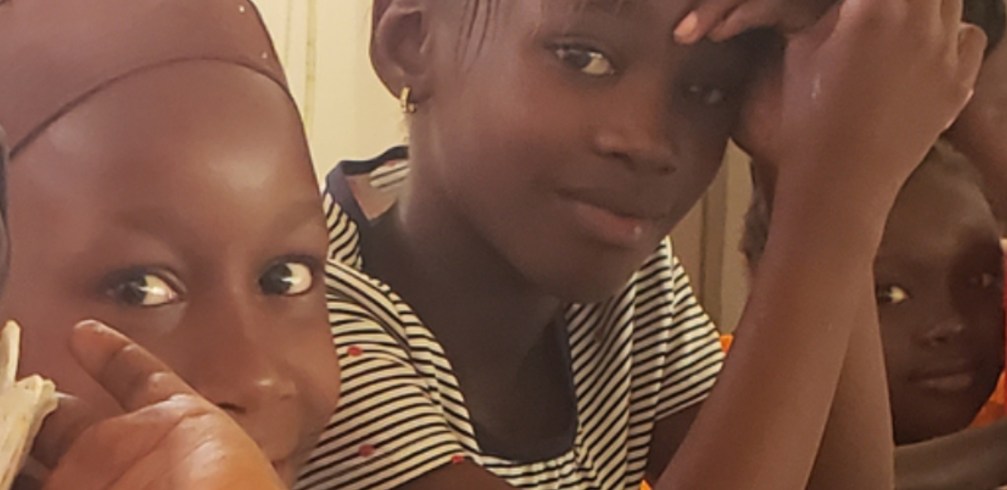
Lots of young faces
A few old faces
Faces
Day Twenty-Eight: Football in Passy

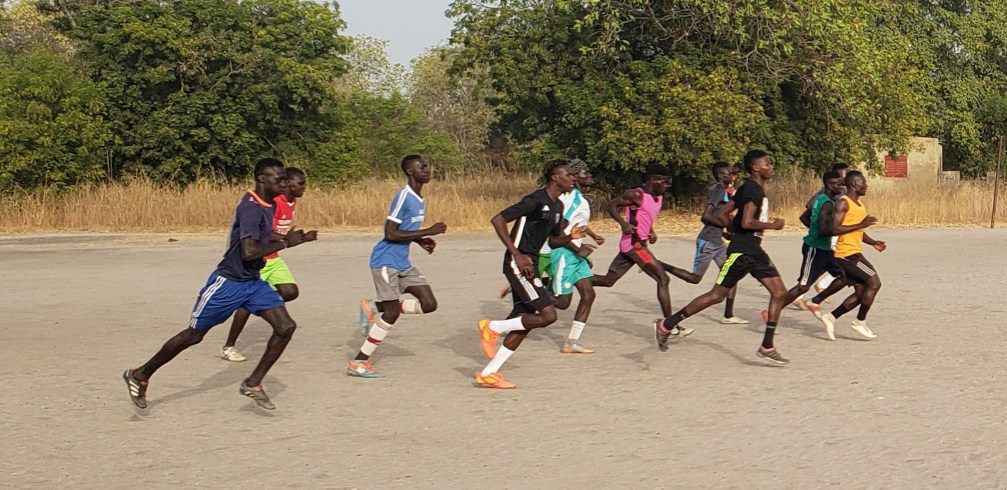
Training on Saturday, the day before the big game

Soucouta supporters letting loose

The match before Mamadou’s Soucouta team took the field

***

In this part of the world, “football” means soccer. It’s a universal game, with many decades of heroic exploits. Yesterday, I got to experience the passion that Senegalese folks have for their team.

Youssoupha and Mariama invited me to go with them to Passy, a town thirty kilometres away, to see our friend Mamadou play for the Soucouta team. We’d travel by bus. I’d likely be the only white person at the game. Of course I said yes. A new adventure.

The teens promised to take me only if I “behaved”. No going off on my own. Passy was a town where my safety wasn’t guaranteed. I agreed to be good, to follow their instructions.

As we walked to the bus, Mariama asked for my phone, and promptly put it into her fanny pack. I figured it was a test … guess I passed.

The bus was absolutely crammed with human beings, drums and cool hats. Soucouta would rule!

Each row had two seats on the left and two on the right. After the back filled up, a middle seat was flipped down for a fifth person, blocking the aisle. As we rolled from Soucouta to Passy, the din filled the air. So many loud conversations coming from everywhere. It was the noisiest trip I’ve ever had.

At the stadium, Mariama lined up for tickets. I took in all the words flying around, very few of which I understood. The world was hot and dry.

We climbed the steps of the bleachers with Mariama and Youssoupha pressing close. Eyes turned as we took our seats. Another game was in progress and the fans were rip roarin’ into it. The skills on the field were amazing … subtle touches, long passes, dust rising with every dribble of the ball. I was in awe, and I was so close to prime football.

Our drummers started their frantic beat as soon as the first game was done. Our cheerers cheered. Some danced. The frenzy was building. The drumming hardly ever slowed. The girl in front of me, wearing a red shawl, rocked and rolled.

And here comes Mamadou and his friends, decked out in powder blue. They dance in formation to warm up, as did their opponents at the other end of the field. We had our end of the bleachers and supporters of the other team had theirs.

In the game, we roared with great Soucouta passes and defensive gems. The energy on the field and in the stands was sky high. Back and forth, lifting our spirits and then crushing them, moment by moment. The whistle sounded and the first half ended 0-0.

Youssoupha and I went down onto the field at halftime. We greeted Mamadou and kicked around a ball with him and some of his teammates. My skills didn’t really show up, but who cares?

The second half blasted into more fevered play. The other team was controlling most of the action. They had a penalty shot deep in our zone, and their players rushed the net. There was a save and a rebound and … an opponent lofted the ball into the net. Goal!

Suddenly the sidelines broke through onto the field. A hundred fans rushed the prancing goal scorer. The other end of the bleachers was full of bouncing humans. Powder blue players lowered their heads.

The sides played on. At one point, I saw someone on the other team start fighting with a teammate. Huh? Fans invaded the field once more. Everyone was running every which way. What was happening?

I looked around and saw spectators clambering down the steps of the bleachers. Mariama was reaching for my hand. On the field, Soucouta supporters faced off with those of the other team. They were throwing rocks at each other! My God, I was watching a riot.

People were running for the exit. Mariama was moving me briskly to the safety of the bus. We scurried inside, with seemingly half the population of Soucouta piling in on top of us.

Soon we were zooming down the twilight highway back home. The referees had called the game because of fighting. It will have to be replayed to determine the semifinalists for the national championship.

This was all new to me. It was so alive, so passionate, so eye-opening. Life is certainly bigger than my history has imagined.

Day Twenty-Seven: Bus Load and a Ball

My phone is taking a rest today and happily I’ve been able to make my laptop work.  An unexpected solution, given the ups and downs of the Internet here. The dust of Senegal has found its way into my phone ports, and my friend Nano has taken it away for a hoped for cleaning.

Wow … here comes a smile. It doesn’t matter if my phone gets fixed in Senegal. It doesn’t matter if my phone gets fixed in San Francisco. And it doesn’t matter if my phone gets fixed! What kind of strange universe am I living in?

***

There’s a lovely story to tell, and the lovely pictures won’t be accompanying the words. They’re on my phone.  No problemo.

I wanted to tuck myself into the end of the tiny patio of Chez Boum.  Blessed by a Flag, I would read more from The White Giraffe, a marvelous book about the adventures of 12-year-old Martine in South Africa. The beer went down easily, as did the story.

And then the bus, a luxury one full to the brim with white-skinned tourists.  They seemed to skip off the vehicle for a first touch of Toubacouta earth.  I heard French and, I think, German. The tour guide came towards me as the folks were occupying two long tables. I asked him if he needed mine, and he nodded yes, without a smile.  I took my chair and rested it near the “Chex Boum” sign painted on a wall.  Shade was still mon ami.

I interspersed reading about Martine with glances over to the arrivals. They seemed to be a happy bunch. I made eye contact with a few of them.  My smiles were not returned. Oh well. I can live with that.

After the group had finished eating, some of them walked around.  They stayed together in pairs or little groups except for a woman with her camera. She knelt down and talked to three local kids. I’m glad someone did.

As Martine made eye contact with a young giraffe, I could feel a presence off to the side. Then those same three children moved right in front of me. They were each saying the same word, which I didn’t recognize. It came clear that they wanted me to give them something.

I arrived in Senegal with five deflated beach balls, the idea of a girl named Sophie back in Belmont.  Trying to blow up the first one, I ripped a tiny hole in the plastic. Tiny was plenty big enough because the ball would no longer hold air. The next three balls went to various gloms of Senegalese kids.  So there was one left, conveniently deposited in my backpack.  I took it out and started blowing.  The young ones stared.

So did many of the tourists. A few of them laughed at my lengthy efforts to make a flat thing spherical. I laughed back, feigning exhaustion.  After several minutes, I had a real ball, splashed with colours. (I think they were red, white and blue, but the evidence is in my newly departed phone.)

The deed being done, I lofted the ball over the girl facing me. She turned and watched it fall to the ground, and didn’t go to chase it. Eventually a boy picked it up and brought it back to me. I threw it over his head. Soon the ball was flying through the air among three kids, and I was forgotten. Many of the bus riders were watching the action closely.  We smiled together.

The kids disappeared down the street with their treasure. The bus filled and backed up. As it pulled away, there were many waves between the riding Germans and French and the standing Canadian.

Day Twenty-Six: Vive La Différence

It was so simple … my great friend Lydia wanted me to taste my favourite flavour. So Marie-paule and Fatou whipped up some penne for lunch, to be adorned with pesto. Ahh … the only thing better than pesto pasta is love.

The family sat down to share the blessed feast with me. Lydia remarked that it’s so unusual for Senegalese folks to eat pasta in the middle of the day. The tradition is rice. And so my friends with their forks were being jolted, while for me it was a natural event.

The previous day, at dinner, pasta also made an appearance, along with a sauce full of unknown goodies. I put a spoonful on my plate. Fatou drew in her breath as she saw my move. I mixed the sauce in with the noodles and got my fork in action. Yum – lots of flavour. Twenty seconds later the burn went deep. I reached for the glass in front of me. “Water won’t help,” offered Lydia. She was right. Grin and bear it for a few minutes … Woh. No more of that. However, lots more of that for Moustapha and Fatou. They yummed their way through plates of fire.

Hmm. A bit different, you and me. And isn’t that what makes the world go ’round?

Sometimes on the patio, I hum opera or Beatles songs. Eyes travel my way. I also love flourishes aloft with my hands, and a pirouette or two. The audience pauses to wonder.

Coming towards me from most every person approaching is “Ça va?” (How’s it going?). It’s expected that my response will be “Ça va” (I’m well), perhaps augmented by “Très bien” (Very well). It’s considered impolite to not give a verbal response. A smile and a wave is not enough.

If it’s in the morning, most Senegalese humans will also ask “Bien dormi?” (Did you sleep well?) I’m not sure how much of that is a true concern for me and how much a ritual. After so many a.m. conversations that went this way, I got really bored with it and replied “Non, je n’avais pas dormi depuis huit nuits.” (No, I haven’t slept for eight nights) Now that was impolite, but I couldn’t resist.

I love periods of silence. I love meditating. As I mentioned yesterday (or was it two days ago? No matter), here in Africa what mostly happens is large gatherings of virtually non-stop conversation, in languages I don’t understand. Maybe I’m exaggerating this contrast, but there’s definitely a difference.

There’s no “better and worse” in all this. Our life experiences and perspectives are sometimes foreign to the other. I figure that’s as it should be.

The world doesn’t need a whole bunch of Bruce’s around every corner. We need large portions of Zidane, Youssoupha, Mariama, Bakerie, Gnima, Nano, Ousmane, Abdul, Luc, Arlette, Anja, Revi, Camille, Pascal, Liesbet, Jo, Lydia, Lore, Baziel, Pil, Jo Jo, Iddy, Kebas, Astou …

… as well

Day Twenty-Five: No Deficit

Sometimes you need to protect yourself from the heat of the sun.

I was sitting in the Jean-Jacques pub yesterday, off in a corner, writing a blog post. My only companion was a very large beer. I had said bonjour to a big table of Senegalese men and women when I walked in but I knew I wanted to be alone. A few of them returned my greeting with some fast French. I smiled and placed a chair under the shade of a mango tree.

For the next hour-and-a-half, I tapped my screen and found photos. In the background was a non-stop conversation en français and Warlof. Really … nobody seemed to come up for air! I didn’t understand any of it. There was a tall and imposing fellow in a long robe and a hat that reminded me of a woven basket. He spoke loudly, authoritatively, with his index finger poised for emphasis. Others replied to him just as sharply. Were people excited? Angry? In love? I couldn’t tell.

Here I am in the beginning stages of learning a foreign language, with ancient years of high school French, and I didn’t recognize anything these folks were saying. It was so tempting to fall into badness. I’ve done so many a time on this trip – not being able to find the noun, adjective or verb that fits; having no idea how to conjugate a verb so that people know whether I’m talking about the future or the past; leaning unsuccessfully into the kind efforts of a native speaker to go slowly. But not this time.

As I sat there with my double-sized Flag, I saw some truths:

1. I’m surrounded by Senegalese human beings who speak French, Warlof and Serai but only a soupçon of English, if any.

2. I’m doing my best to speak and understand sentences that fly towards me, usually at supersonic speed.

3. With the exception of Lydia (now) and Jo (earlier), there is no one here with whom I can carry on a nuanced conversation.

4. I love talking to people about important things, especially what their lives are like, what they’re experiencing, what visions they hold. With the Senegalese, and with almost all the tourists I’ve met, that’s not available here. I miss the depth of talking.

5. At home, my life feels balanced among being alone, being with one other person, and being in a small group. Here what dominates is groups (large and small) – family, friends. Of course those are marvelous opportunities for togetherness but my balance is way off.

6. I need to spend some time in the shade, away from the intensity of group conversation in French.

7. Rather than feeling “less than”, the opportunity for me is to allow in words such as “courage”, “pioneer” and “sufficiency”. Yes, I can do that.

8. I can also laugh at my mistakes. “J’ai chaud” literally means “I have heat”. More conversationally, it’s “I’m hot”. However, “Je suis chaud” tells my companion that “I’m sexy”. Perhaps I should stick with “J’ai chaud”!

***

Now there is a lightness
Now there is a smile
Now there is peace

Day Twenty-Four: Longing

The Evolutionary Collective welcomed 125 people from near and far to its New Year’s Day Internet call. Patricia Albere, the founder of the organization, led us in exploring the topic of “longing”. Part of our time together was in groups of two and three. We looked at what aspects of society we’d like to say goodbye to. Later, what were our visions for the world we’d love to inhabit?

I felt into the questions and stayed open to the images that wanted to emerge. There was no “figuring it out”.

Here’s what I’m saying no to:

1. So rarely do we physically touch each other.

2. Kids respond rather than initiate. Their ideas are not as important as those of adults.

3. We are afraid of each other. Our tendency is to move away rather than go towards.

4. I’m right and you’re wrong.

5. “Home” is our own needs and wants.

And then there’s the vision of what is yet to be:

1. We laugh together at how silly life is.

2. We look deeply into each other’s eyes. We linger there … and feel the beauty.

3. We value ideas from whomever they spring, regardless of age, gender, status or what your peers think.

4. We go slow, seeing the moments of the world unfold before us, and we smile at what is revealed.

5. We hug, easily and often, including all in our positive regard.

It was a lovely two hours together. With Zoom technology, we could see 25 folks at once on our laptop screens. A simple click and there were 25 more faces. The infinite variety and grace of human beings was on full display. It was a privilege to come together like this.

***

Earlier, I sat in a comfy chair near Keur Saloum’s pool. To my left was a black family: mom, dad, son and yappy little dog. They were talking in English, and clearly enjoying each other’s presence. I decided to let them be. My vision for the future revolves around reaching out to new humans but it didn’t seem right to be intruding into their joy. The power of contact, however, was initiated by an unexpected being – the little doglet came close and really turned up the barking.

Mom apologized for “Simba”. I smiled and said it was fine. And then it came to me: tell Simba that my name was Mufasa (Simba’s father in The Lion King). So I did. Mom and dad laughed … and we were off to the races.

Where do you live? > For the next year – in Dakar [the capital of Senegal]. After that, back in the United States.

Where in the States > In California

Where in California? > Near San Francisco

Where? > Berkeley

In eight days, I’ll arrive in Berkeley. I’ll be staying for a week > (!)

Oh my. What can be created, what can emerge, when we simply move closer to each other? I think it’s called magic.

I told Penda and Solomon that I volunteer in a Grade 5/6 class in Canada, and that months ago three girls asked me if I would bring them something back from San Francisco. I said yes, in the spirit of rewarding kids who speak up. It turns out that they all wanted a necklace. Actually the very same design: the tree of life.

Do.you know where I could find “tree of life” pendants in Berkeley? > Yes. Your conference site [The David Brower Center] is only a few blocks away from a bunch of street vendors who carry stuff like this. Walk east on Allston Way to Oxford Street. South on Oxford to Bancroft Way. Three blocks east to Telegraph Avenue … et voilà.

So there!
From Toubacouta, Senegal
across the world to Berkeley, California
There is really no distance between us

Day Twenty-Three: Potpourri

Gnima and Baziel

Shells near the water

Nescafé coffee

***

Three things drew me yesterday:

1. The Leaving

We all knew it. At 2:30 pm, a van would give us a honk at the gate and then whisk away Jo, Lore and Baziel back to Belgium. There would be a hole in our family in the sense of physical proximity, certainly not when it comes to love. The day before, I asked Jo how he was feeling about the coming separation and he quite rightly said he didn’t want to talk about it.

We sat on Lydia and Jo’s patio in the early afternoon and talked about this, that and the other thing … not about what was coming next. Baziel, Lore and Lydia were here and there, chatting and doing the last minute packing. I looked at the teens and realized I didn’t know when I’d see them again. But it will definitely happen. I’m part of a Belgian and Senegalese family now. There will be reunions.

Jo and I have shared many fine conversations over the past two weeks. There’ll be another opportunity at Brussels Airport early in the morning of January 9.

The honk did come, and we all turned to each other. There were gentle and lingering hugs between the three human beings and me. The sweetest moment was the farewell of Lydia and Jo … companions in love, with the glistening eyes. As the van pulled away, we moved to the centre of the dirt street to watch it fade to the east and then disappear into a left turn. Goodbye for now, dear friends.

2. So Different … So Much the Same

There are seven million of us across the world. Almost all of us have two arms and two legs. We have skin. We have internal organs. On the other view, we have different languages, personality, culture, skin colour, facial structure, hairstyle, willingness to express ourselves, age, attitude, inclusiveness/exclusiveness. And here we are on Planet Earth, cuddling together, forming a wondrous mosaic. What a privilege to be here with you.

3. Just a Little Package

The coffee here is instant. It comes in tiny packages that mostly don’t respond to my efforts to open them. There’s sometimes a little line that indicates a perforation, but not always. The arthritis in my right thumb seems to be laughing at me as I twist and turn in search of caffeine. The staff have kindly offered me a pair of scissors. Friends across the table don’t seem to need them. In five seconds they’re pouring the contents into their cup. Today I let go and cut the end off the package. Yesterday I grunted. How can a little bit of instant coffee be such a teacher for me? I don’t know … but now it’s me who’s laughing.

On we go

Day Twenty-Two: The Tree

We went riding on motos yesterday – onto the dirt roads, out into the country. Women carrying loads on their heads, kids running after us, a few individual men strolling along – many of them waved. So did we. Through the dryness of it all, under the beaming sun, we rode beside fields spotted with African trees and goats. Past a couple of turquoise mosques surrounded by walls … and finally to the edge of Missirah.

We pulled over in the centre of downtown. In a shop, I lusted over a green, yellow and red Senegalese soccer jersey. Sadly the only sizes in stock started at XXL and went up from there.

A smiling old fellow was to be our guide this morning. He was a fishmonger who recognized me from a week ago. I felt badly that I didn’t recognize him. It makes me pause to realize that I have far more distinctions about the facial structure of white people than I do about black folks.

The gentleman led us to the fish farm he tends – three rectangular pools covered with netting. As he continued along, I moved away from the group to linger with several cows on a large expanse of dusty land. Then there were mangrove trees to visit, with their exposed roots reaching down under the water. A quiet time, as I renewed my wondering about whether I could live in Senegal.

It felt like time again to be with my friends. The glom of us returned to village streets. A twist here and a turn there began to reveal a hugeness ahead.

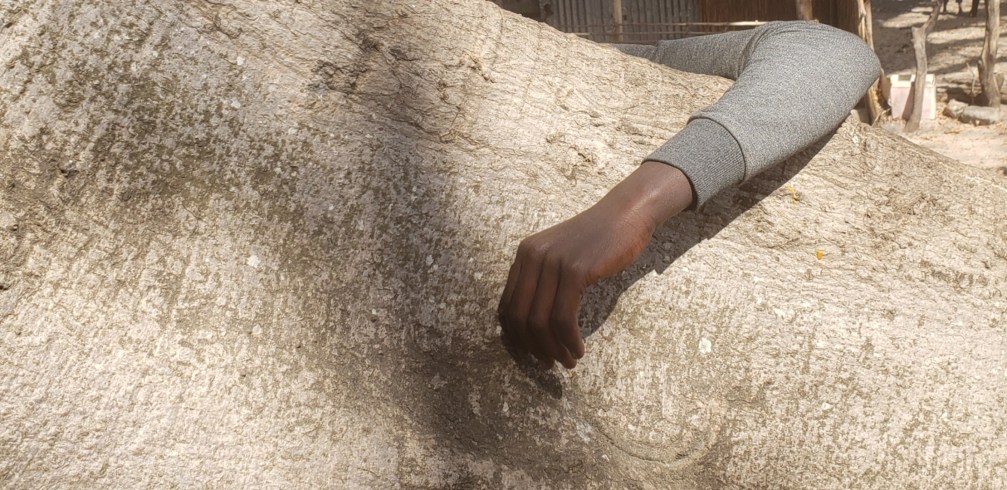
I stopped. I stared. Before me was a gigantic tree … in height, in the circumference of its trunk, in the massive biceps of its main branches. Our leader said don’t go close: the bees will attack you. So I kept the distance in my body. My soul, however, was reaching towards the immense one.

The group was moving on and I was standing still. I was in the presence of vibrant life, a wooden symbol of transcendence, of gathering in, of coming together.

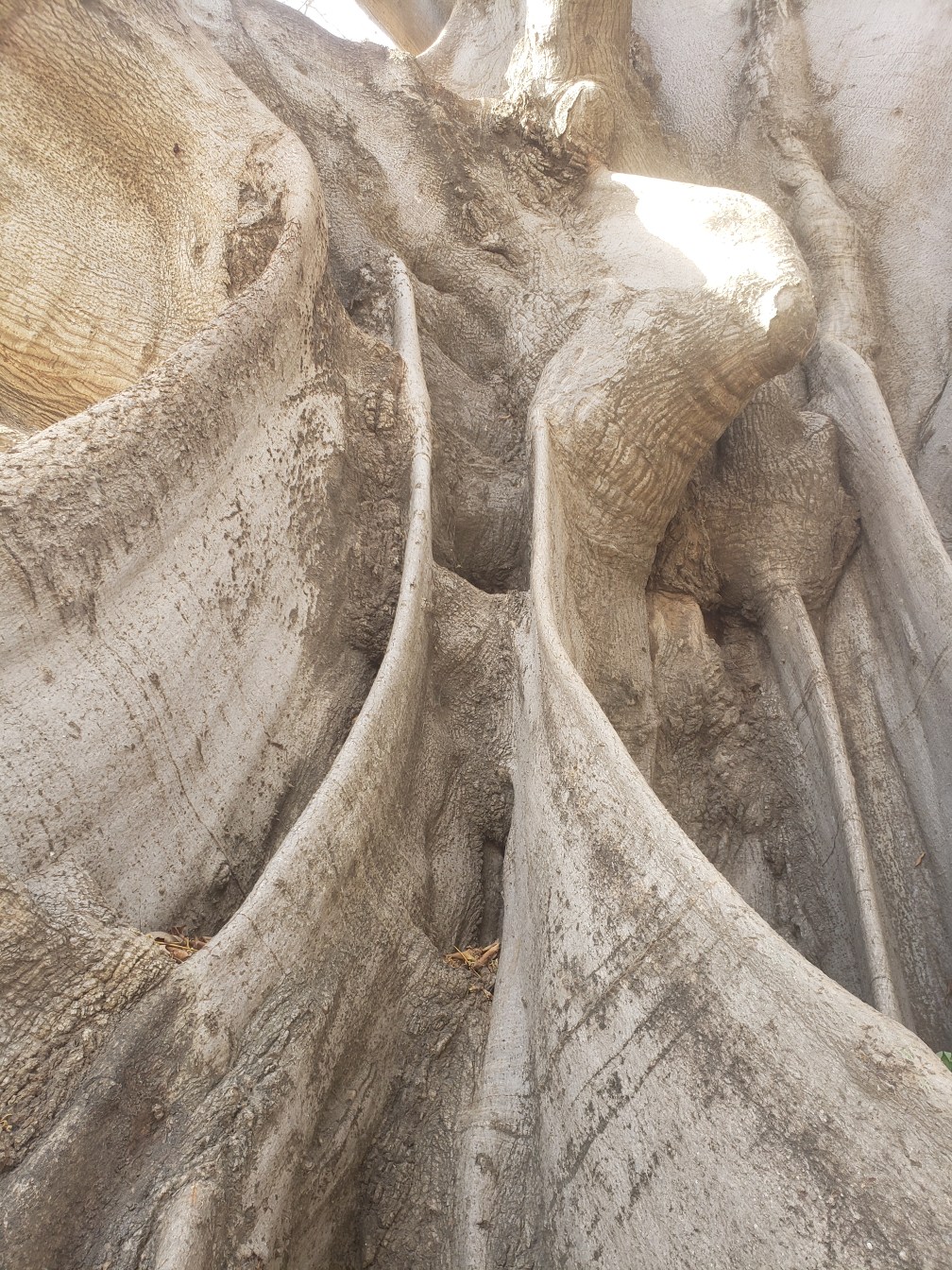
We returned soon to the other side of the tree, where apparently there were no bees, since we were invited to come close. The tree is a fromager, so named because its soft wood made perfect boxes for the transport of cheese. Facing me was the largest fromager in West Africa, approximately 1000 years old. Its bark folded in marvelous ways. One exposed root many metres from the trunk was named Croco by the residents, due to it resembling a crocodile.

As our guide spoke in French, the reverence in his voice was clear. Lydia sidled over to me and began translating. This fromager is the mother of Missirah. Its leaves speak of the turning of the seasons. Crops are planted when the fromager says yes. When there’s a problem in the village, the women dress up as men, and the men as women. Sacred milk is poured on the roots and the fromager receives the supplication, offering its wisdom in turn. Infertile women visit the trunk, asking for a child. Lovers are married within the folds of the sacred one. Anyone and perhaps everyone touches the wood and feels the communion.

I take the dear fromager with me, not only in photos but also in my travelling being. Perhaps the next person I meet will have an inner fromager … to be honoured, to be loved, and to receive love from.

Day Twenty-One: La Fête

The party was a lunch, a dance and a gift-giving for the kids who we Belgians and Canadian are sponsoring in Toubacouta. Balloons were hung, streamers were streamed, fancy tablecloths and napkins graced the tables, and joyous music was bipbopping out of the speaker.

Girls did their hair in magical ways. They wore the brightest dresses and shirts. One boy even wore a bow tie!

For awhile I made faces with some of the kids and played the game where we’d hide behind someone sitting between us and then poke our heads out. Such fun. Some children were nicely shy while others bubbled over in their eyes. Some danced in the middle of the circle for maybe a minute. Others were pushed in there by friends and quickly scooted back to the edge of things. Mr. Bow Tie really rocked and rolled as we all cheered him on.

There was lots of lunch prep and I loved joining in. I was the only guy to do so but who cares? I sat with some girls and women and peeled onions. And there were no tears! So different from home. Next were cloves of garlic and I got to experience the impact of arthritis on my fine motor skills. I was slow and clumsy but again all of that was irrelevant. I finished with beans. Many hands made for light work as the sounds of Warlof and Flemish filled the space.

Several women distributed the various yummy food on plates in the kitchen. I got to be one of the lucky ones who presented the meal to individual kids. The whole idea was that the day would be special for the children. We served them. Before the meal we gave them the best seats on the patio. Here’s a pic I love:

After we ate, the balloons clearly needed to become soccer and volleyballs. The young’uns leapt in the air and in their hearts.

At one point, I just sat back and took it all in. Two years from now, will I be bilingual? Will I be spending a few months each year in Toubacouta, teaching these very kids how to speak English? I don’t know … but the possibility is real.

Who knows what journeys lie ahead … in my life, and in yours. Let us embrace the mystery.