My body is separate from yours. Sometimes we touch but mostly we’re occupying different spaces in the world.
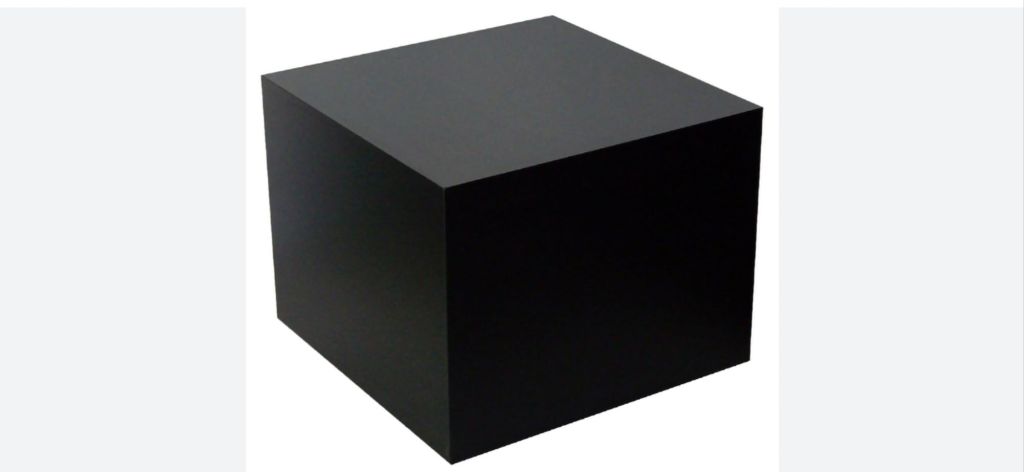
So … you could say that we’re each an object, something solid. Maybe something like this …
That looks a little extreme – all those straight lines and right angles. But you get the idea.
In 1971, a fellow named Werner Erhard started a program of personal “transformation”called est (Erhard Seminars Training). The training consisted of two weekends of very intense sessions, at least fifteen hours a day.
Transformation: An extreme, radical change in form or appearance
Werner had many wise things to say. Here’s one:
You are the space in which your life occurs
Not a cube. Not a thing. Instead, something like this:
I like writing. I like hoping that my words reach some people. I like fantasizing that some of my thoughts will outlive me in the reader.
And then there’s the elbow bone …
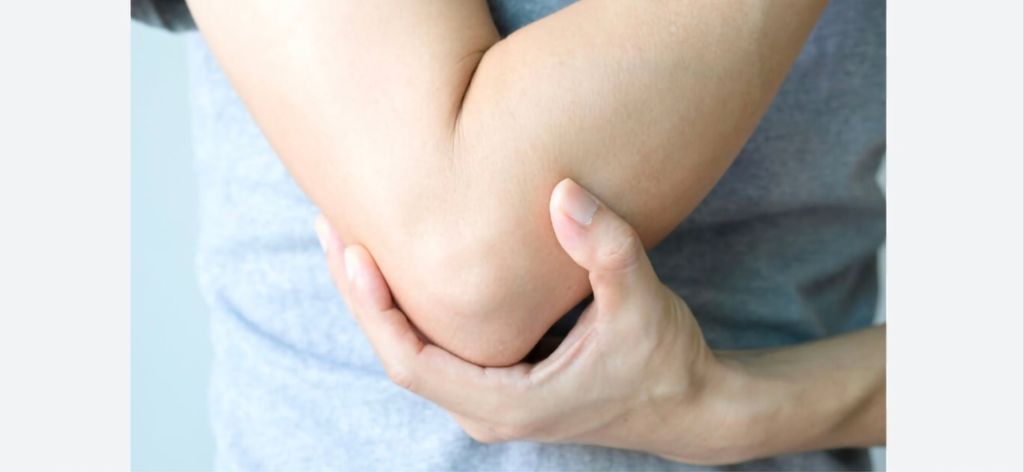
I love a particular bone. Here’s a photo:
It’s not the pointy one. It’s the prominent one between this person’s thumb and first finger.
I watch people wearing short sleeves. Every one of them has this bone, proudly displayed. I bet it’s attached to an entire skeleton!
Why does this bone thrill me, you ask. I have no idea … and no interest in probing a spasm of analysis about it. The whole subject of bones underneath skin leaves me thoughtless.
Let’s have a time machine … with lots of buttons to press. How about 1821? Or, if you like, 2092.
One no better than another. Just different flavours of ice cream. Delicious.
Some say “Here and Now” is better. Maybe not. Or that an evolutionary future beckons. I bet that’s true, but perhaps it won’t be better, just different.
The moments of time all have their beauty … and blemishes. I choose to honour them all, even though it appears that I am stationary in 2026 right now.
What happened in 1821? Who was roaming around? What discussions could I have with the locals?
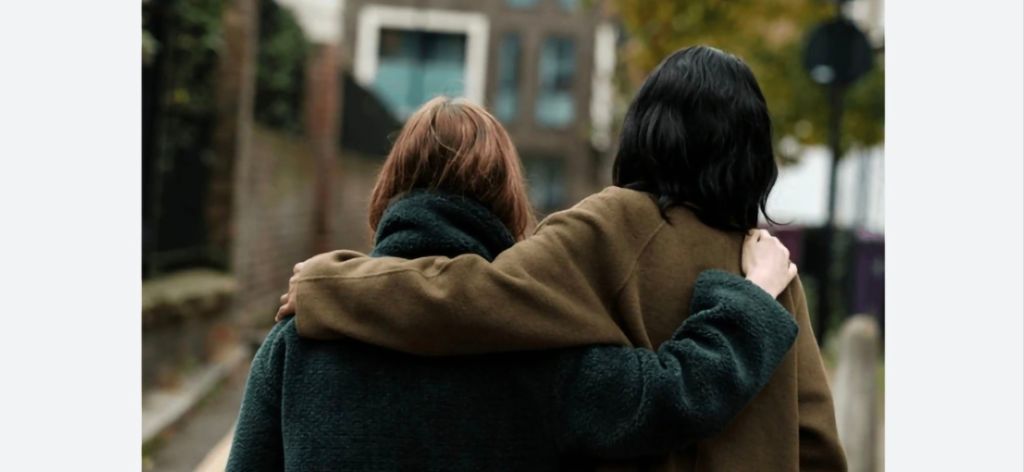
2092 is a mystery. No history books to consult. If my current mind tries to put a frame around the future, the wood is from a recent tree. In the years to come, such a living being may look like this:
And then there’s my life …
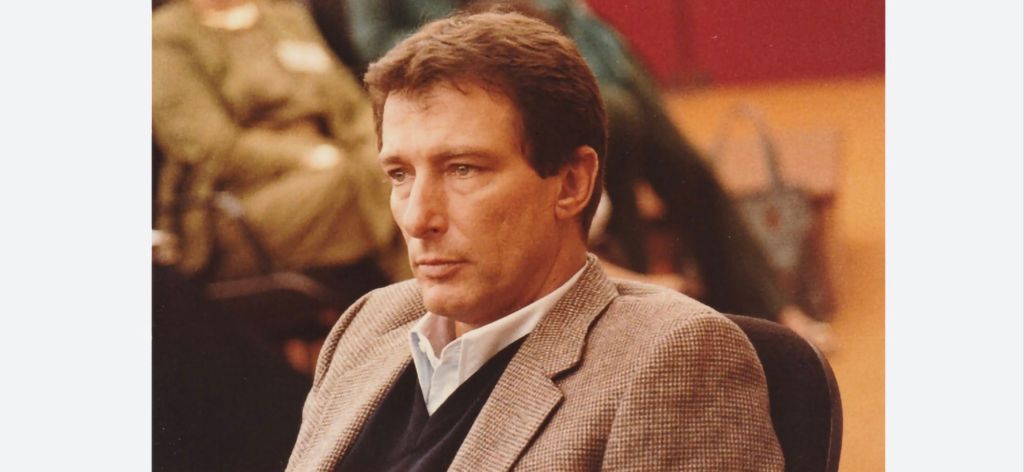
Bruce at 5 – scared as Hurricane Hazel hits Toronto
Bruce at the moment of 21 – standing in the Eglinton subway station as I became an adult at 10:00 am
Bruce at 39 – marrying Jody in Coaldale United Church in Alberta
Bruce at 74 – waiting in the Brussels Airport with my six pieces of luggage, having just changed countries
I’ve had many teachers. The most valuable have taught me about living a good life, a kind life.
Rodney Smith was one of the meditation teachers at a 2011 retreat at the Insight Meditation Society in Barre, Massachusetts, USA. I smile when I remember him. His words, however, have floated away.
It reminds me of my favourite quote …
I won’t remember what you said
I won’t remember what you did
But I’ll always remember how I felt when I was with you
I thought of Rodney this morning, and Googled him. He retired from active teaching in 2023. I hoping he’s enjoying life.
I found an article he wrote a long time ago. Much of it speaks to me. Perhaps a few quotes will reach you too.
Now I have some words to join with my feelings.
***
The main problem with many forms of spiritual growth is that we keep using the very perceptions that foster our delusion as the means to awaken, thereby tightening the grip of the conventional paradigm, even as we attempt to transcend it. We take the conventional paradigm of separation as a fact and apply its rules as the strategy for our release. An example of this is the way many of us percieve the spiritual problem as a personal deficiency.
…
All this reminds me of the Chinese Finger Trap. The only strategy we have learned in such a predicament is to pull our fingers apart, but that unfortunately tightens the grip the trap has on us.
So … “You can’t get there from here” if the here is me constantly examining my belly button and comparing it to other belly buttons.
***
If ethical behavior has been a central theme throughout our spiritual journey, we will continue to reference our conduct during the uprooting of the sense-of-self … When not harming ourselves and others becomes the conditioned way we live, then this theme will also be played out as our conditioning is being surmounted. As our conditioning decreases and wakefulness increases our innate response not to harm begins to take over.
I have acted kindly for as long as I can remember, even when my ego was often flaring. Now that my life is loosening, the kindness is coming along for the ride.
***
The starting point on the path is asking ourselves what we really want out of life, and then, whatever that response is, doing it full-heartedly. Even if our answer is a worldly pursuit, full-heartedness will show us its value and limitation. After repeatedly seeing the limitation of our wanting, our energy begins to consolidate around a deeper objective and yearning.
Rodney! You’re a smart guy.
I used to throw myself into a golf simulation video game called Links. I loved the beauty of the courses. My interest in the game is long gone … but my yearning for beauty continues.
I just read a piece on Facebook about Barack Obama, after the 2012 Sandy Hook Elementary School shooting that killed twenty young kids and six staff members.
He cried … again and again.
He talked to every family on the phone.
He went to twenty-six funerals.
He sang “Amazing Grace”.
***
And here are some responses to the post:
I’ll never forget seeing him tear up during that address – it still gets me choked up even now so many years later.
We miss your wisdom and diplomacy, President Obama. God bless you and your family.
This is what a true leader looks like.
It was February 9, 2007, a blustery winter day in Chicago, when Obama gave his speech announcing he was going to run in the presidential primary. My son was sitting in Centennial Hospital in Nashville, holding his one-day-old baby boy while watching the speech on TV. Then he said what we did not know would turn out to be an eerily prophetic statement. He asked how he would ever be able to explain to his son in the futurethat we would not have that caliber of a president after Obama winning and serving two terms. And that’s exactly what happened.
I sang last night at Salvatore’s. A week or two ago, I wrote about the song – “When I Dream”. It’s one I’ve wanted to sing for many years. The words come from the mouth of a woman who has all the material pleasures of life … but is alone. Last night the mouth was mine.
My memorizing of the last few weeks met with a wall. There was one line that my mind couldn’t absorb (the second one here) …
I can be the singer or the clown in every room
I can even call someone to take meto the moon
There I was yesterday afternoon, saying those lines over and over, usually being stopped at the word “call”. It wouldn’t flow from my brain.
I imagined the evening. The message is so sad, so human … and I didn’t want the moment to be spoiled for the audience by me standing there searching for a word.
What to do?
Change theword, Bruce!
And so I did.
I can even ask someone to take me to the moon
My mind nodded. Yes. Further practice revealed the new combo to be natural. I walked onto the stage with a smile. The folks in chairs would hear a woman’s anguish and yearning.
And they did.
But when I dream, I dream of you Maybe someday you will come true
They shouldn’t be important … measures of “how much”. It’s the moment-to-moment experiencing of people, of life, that should rule the day.
But my ego intrudes.
Four days ago I wrote about the number of views I got on Jetpack in January. So strange – it kept bouncing back and forth between 1303 and 1304. Today that number is 1304, one more than November’s 1303 (!)
I thought that writing about this might cause the obsession to float away but apparently I’m still hooked.
On a typical day, Jetpack tells me that I had 20 or 30 views. I woke up this morning to find that yesterday’s total was 997!
My Jetpack day starts at 6:00 am Belgium time (midnight in eastern North America). Right now it’s 10:45 am, so nearly five hours after today’s counting started. How many views today? 506!
What is happening here? Jetpack also tells me the country of origin for my views. About 95% of yesterday and today’s views came from one country. Any guess?
There I am in an elementary school gym. The floor is covered with a foot of water (30 cm). And it’s my fault. I have a bucket and I’m using it to get rid of the water … an endless task. I think of using a siphon but I don’t have a hose and anyway I can’t remember how to use one. A quiet desperation descends.
***
There was a time when Jody and I loved playing a video game called Myst. A grand story of worlds and journeys and puzzles. We were immersed in the pastel beauty of it all. No killing, no blood, lots of wonder.
Here in Belgium the words “video game” haven’t entered my mind … until a few days ago. I sat in Izy Coffee with a friend of mine I’ll call Jerome. We share a love of writing, and our conversation flowed on.
I asked him what work he does, and guess what? He develops video games. And so a question:
“Can I still buy Myst? Or are there modern games that have a similar vibe of exploration?”
He had a few recommendations, such as Blue Prince and Neyyah. And I glimpsed a new chapter opening.
Back at home, I continued my research. Among the delicacies revealed was a title called Ether One. In the words of someone named AI:
Ether One is a first-person adventure puzzle game that explores the fragility of memory and dementia, where players act as “Restorers” navigating a patient’s fractured mind.
It addresses deep, emotional themes of dementia, mental illness and personal identity through a non-intrusive, narrative-focused approach.
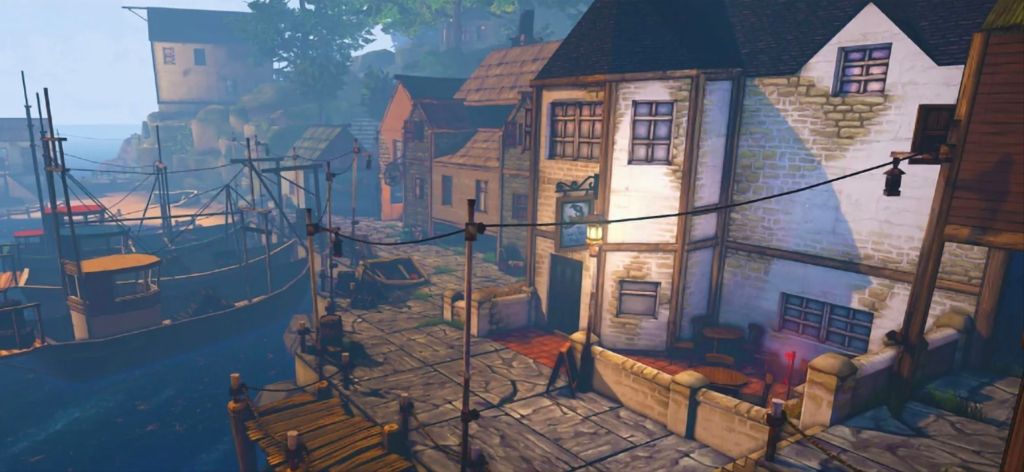
Ether One is characterized by its artistic, often nostalgic and sometimes eerie environments, emphasizing atmosphere over fast-paced action.
Once again I want to explore worlds, this time not of geography but of the mind. I’ve recently started volunteering at a care home, being with patients who have dementia.
Ether One is calling me … and my wallet has followed.
I’m only half an hour into the gameplay but here are comments from those who have walked farther along the path:
There are games that are so powerfully crafted that the emotional response – by the time they game ends – is overwhelming. Then all you can do is ponder everything that happened. You just sit there. You’re sad. Upset. Satisfied.
Ether One made me feel something very real in a time of immense difficulty in my life. For that, I thank it.
Don’t be surprised if you find yourself writing emails to people you’ve lost touch with afterward. This is one of those stories that makes you care all the more about the things you have in the real world.
For those who read my post yesterday, the number when I went to bed last night was 1303. This morning it’s 1304. I smile both ways.
***
Now. Where is my heart now?
Open … closed … vast … focused … free … bound. They’re all part of a life but too often I don’t notice.
How about this very moment? I’m sitting in Lloyd Coffee Eatery, tapping away. Now a pause to look around. A young man nearby, working on his laptop. I send love. I’m curious about his life. I like this moment. I’m aware.
I sense that the vastness is available … now and now and now. Even in the moments of tightness.
Some Buddhist human being said this:
But isn’t the point of the cushion to be able to get off the cushion? I might be able to hit one thousand free throws in a row, but if I can’t do it in a game-time situation, what’s the point? When my mother-in-law is in town, or when I get cut off in traffic – that’s when I need my practice. When the sink is full of dishes. What’s the point of sitting for an hour if I can’t forgive my partner for finishing all the almond milk?













 Bruce's Blog